From your first message
to follow-up at home
Surgery is a serious decision, and traveling for it adds practical steps and risks. This page sets out the whole process in order, so that you can decide at your own pace. The treatment plan and cost agreed before you travel do not change unless you ask for a change.
Before you plan any travel
We are closed on Thursdays, Sundays and Korean public holidays. No consultations, surgery or suture removal take place on those days. On Fridays we are open until 21:00, so if you arrive on a Friday evening you can be seen the same day.
Please bring your passport. We need to see the original document.
Patients under 18 need the consent of a parent or legal guardian, who must also accompany them. Requirements can differ by age and treatment, so please ask before booking anything. This website is intended for adults; if you are under 18, please have a parent or guardian contact us.
How it works, in order
Online contact is a preliminary exchange of information, not a medical consultation or diagnosis. Whether treatment is suitable is decided by the doctor at an in-person examination in Seoul — and you can still decide not to proceed at that point.
-
Step 1
Online inquiry
Message us on WhatsApp or by email, in English. A private one-to-one exchange; nothing you send is visible to anyone else. Sending a message does not commit you to anything, and we don't follow up unless you ask us to.
-
Step 2
Information you send us
So that we can give you a fee indication before you travel, please tell us:
- Where the scar is
- Its approximate size (in cm)
- How long ago it occurred (an approximate month and year is fine)
- Treatments so far (surgery, laser, injections, creams; "none" is fine)
- Your general health and current medications
- Your preferred travel period
We don't ask where you had surgery, or why you are not going back there.
You may send photos if you wish. We look at them only to answer your enquiry, and we do not save them. Please read the Privacy Notice first, and avoid including your face unless the scar is on your face. Photos are clearest in daylight near a window, taken from the front and at 45 degrees, with a ruler or a coin next to the scar for scale, and focused close up rather than zoomed in.
You don't need to have everything ready. Start with what is on your mind. Without photos, however, we cannot give a fee indication before you travel; the method and fee are then confirmed at the examination in Seoul. Any fee we quote covers the surgery only, not travel or accommodation.
-
Step 3
Preliminary assessment by the doctor
Our staff read your message first; anything that needs a medical judgement goes to the doctor. We reply with whether treatment could be an option for you, the method that seems likely, the fee range and how long you would need to stay in Seoul. If treatment where you live seems the better option, we say so. Typical response time: {{RESPONSE_TIME}}. This is a preliminary assessment from photos and your description, not a diagnosis.
-
Step 4
Treatment plan and written estimate
Fees are quoted in KRW and cover the surgery; travel and accommodation are not included. Where the fee cannot be fixed from photos, we say so and give the range we can. The plan and the cost do not change once you are here unless you ask for a change.
-
Step 5
Travel and arrival
Book flights only after we have agreed the schedule, because it is planned backwards from the day the sutures come out (see How long to stay). If you arrive on a Friday evening, we are open until 21:00.
Entry requirements
Requirements change and depend on your nationality; we do not advise on them. Please check the official sites of the Korean government: K-ETA (Korea Electronic Travel Authorization)(opens in a new tab) and the Korea Visa Portal(opens in a new tab).
-
Step 6
In-person consultation — you decide
The doctor examines the scar directly and confirms the method and the fee. If the examination shows something the photos did not, we explain it then and discuss again whether to go ahead. You can still decide not to proceed at this point.
Consultation and surgery: same day, or separate days
Depending on the size and location of the scar and the anesthesia, consultation and surgery are done either on the same day or on separate days. We tell you in the pre-consultation which day surgery is planned for, so that you can book flights accordingly.
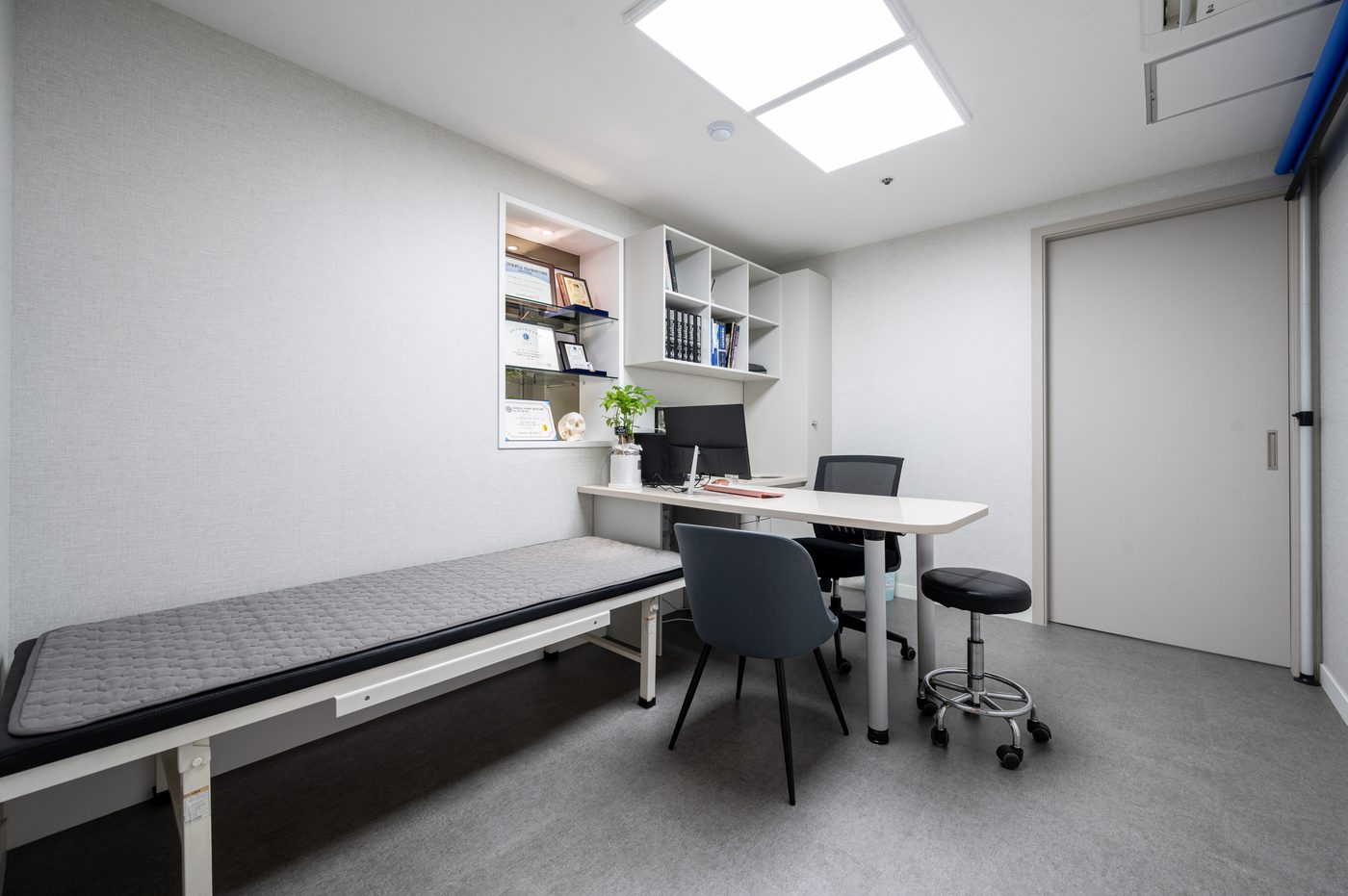
Examination room -
Step 7
Treatment
The director operates, using surgical loupes and a microscope and closing the skin layer by layer. Scar excision is usually one operation, occasionally two.
-
Step 8
Post-operative visits and suture removal
While you are in Seoul, the wound is cleaned and checked. Keeping tension off the suture line matters most for how it heals; we explain what to do and what to avoid during your stay. Sutures are removed after 7–10 days on the face or about 14 days on the body. Absorbable sutures are sometimes used inside the skin, but the surface sutures still need to be removed.
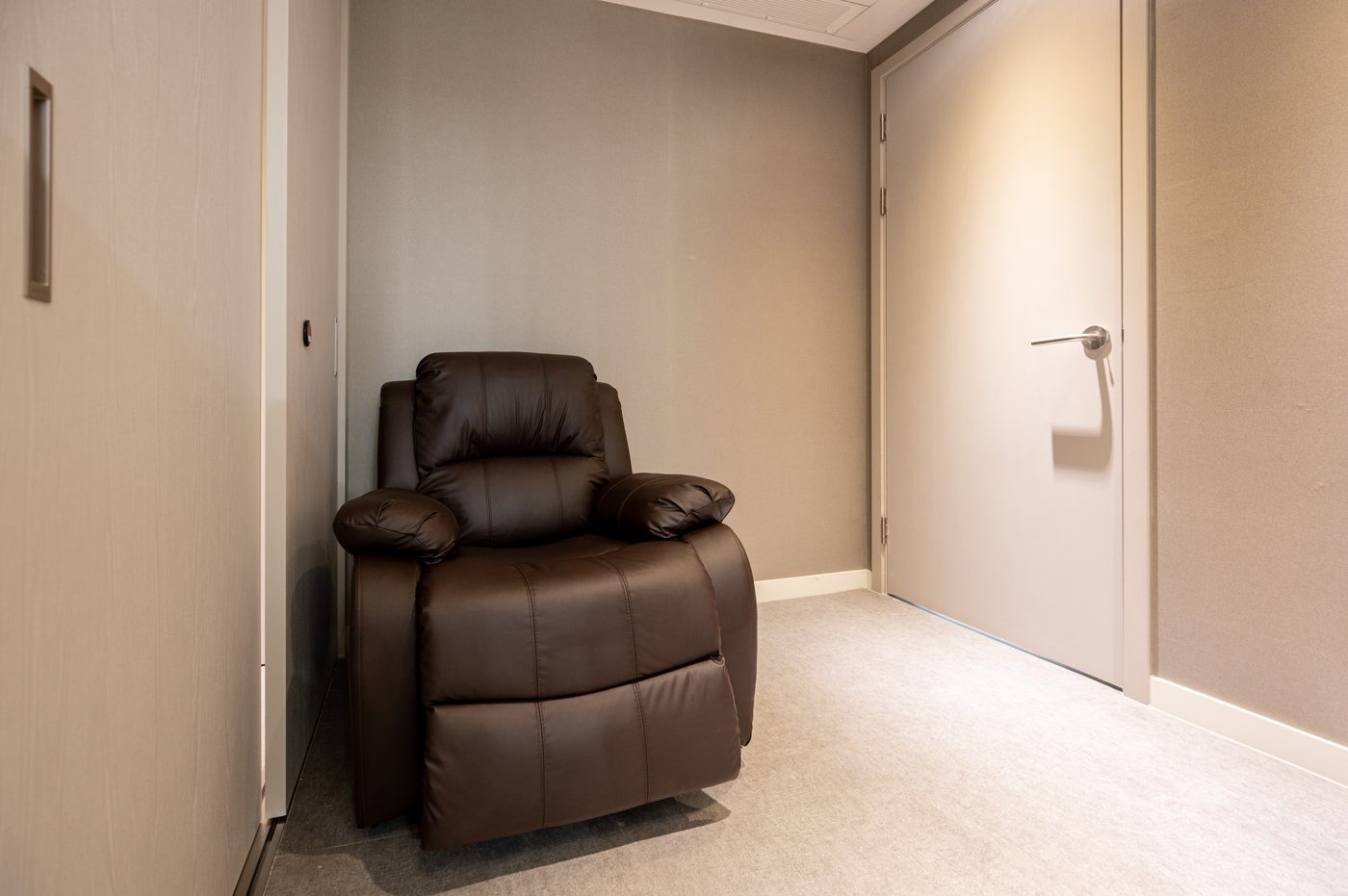
Recovery room -
Step 9
Return home and follow-up
Aftercare instructions are given in English on WhatsApp. We follow the scar by photo at 1, 3, 6 and 12 months; there is no need to come back for this. Korean-language medical records and related documents can be issued; documents in other languages are available on request and may take time and cost extra. How to look at the scar as it changes, and how to stay in touch, are on After You Return Home.


Planned backwards from
the day the sutures come out
Your dates are planned backwards from the day the sutures are removed, not forwards from your arrival. Removing sutures too early can let the wound open; too late, and they may leave marks. It is not a step that can be moved freely, so the schedule starts there.
- For scar excision, sutures are removed after 7–10 days on the face, or about 14 days on the body.
- How long you need to stay depends on the area. Skin that moves with facial expression or with a joint needs different timing from skin that stays still.
- Thursdays, Sundays and Korean public holidays are closed. Suture removal is never scheduled on those days.
- Not being able to stay a full week, or having only a few days off, is common. Tell us your constraints first and we set out what is possible within them.
- If your dates would compromise the result, we tell you that too.
Having the sutures removed by a doctor at home
In some cases the surface sutures can be removed by a doctor in your own country. This has to be arranged with us beforehand. Check in advance that a doctor at home is willing to remove sutures from surgery carried out abroad; some clinics decline. We provide a letter for your doctor stating the procedure and when the sutures should come out.
What traveling for surgery adds
Surgery is a serious decision, and traveling for it adds practical risks. You need to stay in Seoul until the wound is stable, avoid strenuous activity, and plan for the possibility that a complication appears after you return home — in which case you may need care from a local doctor.
- Stay until the wound is stable. Plan to remain in Seoul until the sutures are out, or until the doctor confirms that removal at home has been arranged.
- Moving about and the flight home. Avoid strenuous activity and anything that pulls on the suture line, during your stay and on the way home. Flying itself is not usually a problem, but the timing depends on the area and on where the sutures are removed; confirm it before you book.
- A complication after you return. Bleeding, infection, the wound opening or worsening pain can appear once you are home. You would then need a local doctor, in your own health system and at your own cost. We cannot arrange follow-up care in your country, and we advise you by message only.
- Insurance. Most travel insurance policies do not cover complications of elective surgery. Check yours, in writing, before you book anything.
- If revision surgery is needed. This is discussed individually: {{REVISION_POLICY}}. Any additional procedure is explained first, including what is covered by the original plan and what is charged separately. Nothing goes ahead without your agreement.
What to tell us about your health
Some of this affects whether and when surgery can be done. Please tell us in the pre-consultation, and again at the examination.
- All current medications, especially blood thinners (anticoagulants and antiplatelet drugs). Do not stop any medication on your own.
- Supplements and herbal products you take regularly.
- Allergies, including any previous reaction to local anesthetics, sutures, dressings or antibiotics.
- Medical history: previous operations, how earlier wounds healed, a tendency to keloids in you or your family, and any ongoing condition.
Language, payment and documents
- Language
- English-speaking staff are at the clinic, and Chinese is also spoken. The doctor's explanations are interpreted where needed. Whether an English-speaking staff member sits in throughout the consultation: {{EN_STAFF_AVAILABILITY}}.
- Payment
- Fees are quoted and charged in KRW. Accepted payment methods: {{PAYMENT_METHODS}}.
- To bring
- Your passport (original); a list of your medications; and, if you have them, records of previous treatment of the scar.
- Documents you can take home
- Korean-language medical records and related documents can be issued. Documents in other languages are available on request; translation and issue may take time and cost extra.
Start with a message.
Online contact is a preliminary exchange of information, not a medical consultation or diagnosis. Whether treatment is suitable is decided by the doctor at an in-person examination in Seoul — and you can still decide not to proceed at that point.
Or by email: {{EN_EMAIL}}. What to send, and response times, are on the Contact page.