A scar cannot be erased.
It can often be made less noticeable.
Scar excision, keloid surgery and re-suturing in Seoul, by a board-certified plastic surgeon. The same doctor sees you from the first consultation to follow-up.
- Sinnonhyeon Station (Line 9), Exit 8 · about 100 m
- Open until 21:00 on Fridays
- One doctor, from consultation to follow-up
Which scar are you
thinking about?
Choose the one that fits. The pages for scar excision and keloids also set out what the treatment involves, what it costs and its risks.
- A scar from years ago An old scar can be treated once it has settled, even many years later. Scar excision
- A scar from surgery or an injury Scars after cosmetic surgery, a caesarean section, an injury or a burn. Scar excision
- A raised scar: keloid or hypertrophic A scar that has thickened, sometimes with itching or pain. Keloids and hypertrophic scars
- A wound sutured elsewhere that you would like redone A wound closed in a hurry, or a step or misalignment along the line. Re-suturing and fine suturing
- Injured while in Korea First-aid steps, when to go to an emergency room, and how to reach us. Emergency guide
A scar cannot be completely removed.
In many cases, it can be made less noticeable.
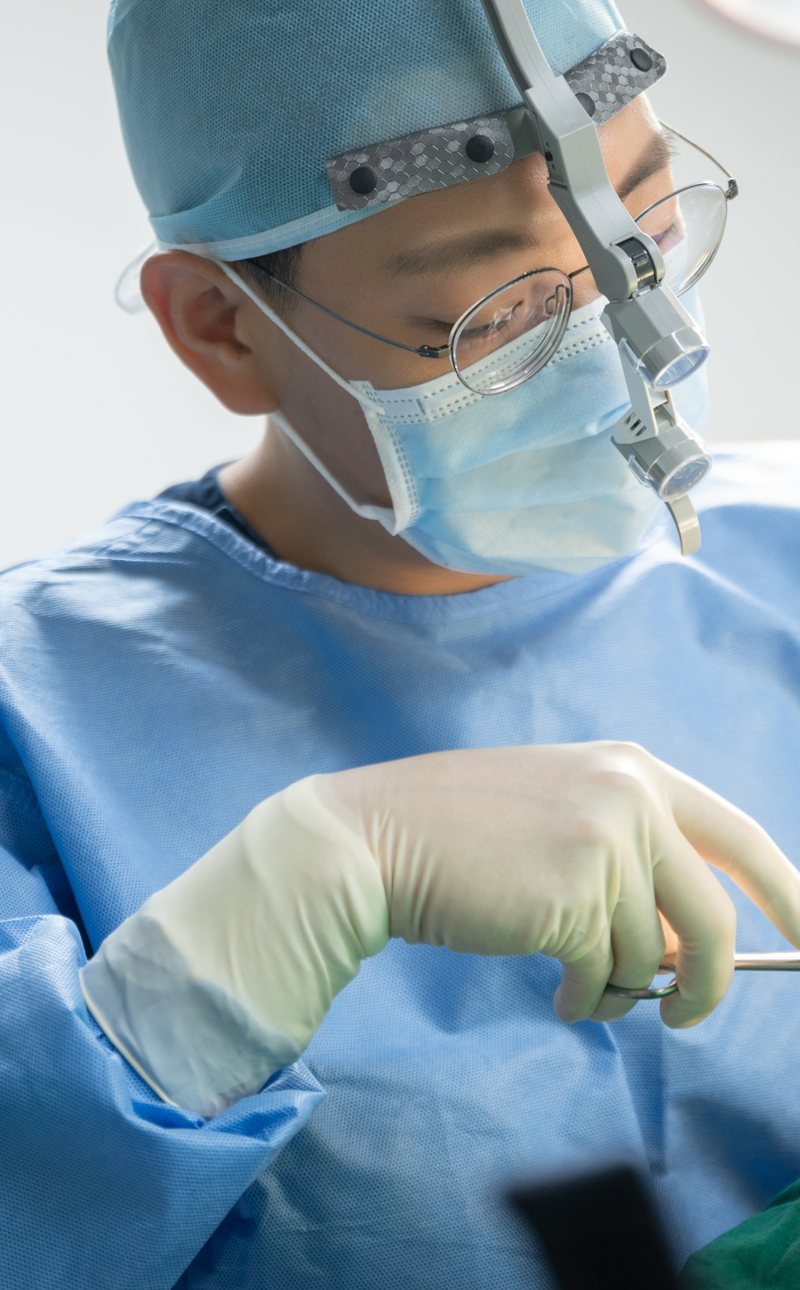
From the first consultation to follow-up, the same doctor looks at the same scar and takes responsibility for it.
01
We don't ask why.
We won't question how the scar happened or what treatment you have had before, and we won't judge either.
02
We tell you first what cannot be done.
A scar cannot be completely removed. After treatment, a different scar remains. Even so, it is possible to aim for a scar that is hard to recognize as one.
03
We don't recommend treatment that isn't suitable.
If we think that treatment where you live is the better option, we say so plainly.
04
No additional proposals once you are here.
The treatment plan and cost agreed before you travel do not change unless you ask for a change.
05
The same doctor, from start to finish.
Consultation, surgery, suture removal and the follow-up of the scar are all carried out by the director.
From your first message
to follow-up
Contacting us online is a preliminary exchange of information, not a medical consultation or diagnosis. Whether treatment is suitable is decided by the doctor at an in-person examination in Seoul — and you can still decide not to proceed at that point.
-
Step 1
You send us a message
By WhatsApp or email. Where the scar is, roughly how large it is, how long ago it formed, what treatment it has had, your general health and current medications, and when you could travel. Photos are optional.
-
Step 2
Preliminary assessment by the doctor
The doctor reviews what you sent. We reply with whether treatment could be an option for you, the method that seems likely, the fee range and how long you would need to stay in Seoul. If treatment where you live seems the better option, we say so.
-
Step 3
Treatment plan and written estimate
Fees are quoted in KRW; travel and accommodation are not included. The plan and cost do not change once you are here unless you ask for a change.
-
Step 4
Consultation, treatment and follow-up in Seoul
The doctor examines you in person first, and you decide whether to go ahead. Sutures are removed after 7–10 days on the face or about 14 days on the body. After you return home, we follow the scar by photo at 1, 3, 6 and 12 months.
Surgery is a serious decision
Take the time you need. There is no deadline, and we don't follow up unless you ask us to. Hearing what we have to say and then deciding against treatment is an entirely reasonable outcome of a pre-consultation.
Start with a message.
Tell us where the scar is, roughly how large it is, how long ago it formed and what treatment it has had so far. You don't need to explain how it happened.
You may send photos if you wish. Please read the Privacy Notice first, and avoid including your face unless the scar is on your face.
Or by email: {{EN_EMAIL}}. Phone is answered in Korean only. See Contact for what to send and response times.